


Airports use technology for passenger flow, baggage tracking and predictive maintenance to enhance efficiency and experience.
Published On 29 Jan 2026
As global air passenger traffic is forecast to hit 10.2 billion in 2026, a 3.9 percent year-on-year increase, investments have been pouring in to improve airport infrastructure and operational efficiency and use artificial intelligence to achieve it.
Working with data released by Airport Council International, airports are relying on the increasing use of AI to embrace the rise in demand.
Recommended Stories
list of 3 itemsend of list
AI is now being embedded in airports’ workflows to reshape everything from passenger flow management to airside maintenance, cybersecurity, lost luggage and enhancing on-site and virtual customer experiences, according to analysts and experts at the Airport AI Exchange event this month during discussions of the technology’s existing use and its potential.
The use of AI-powered analytics to anticipate congestion at security, immigration and boarding points is also helping to prevent delays. Resources are being allocated to shift from reactive crowd management to predictive operations.
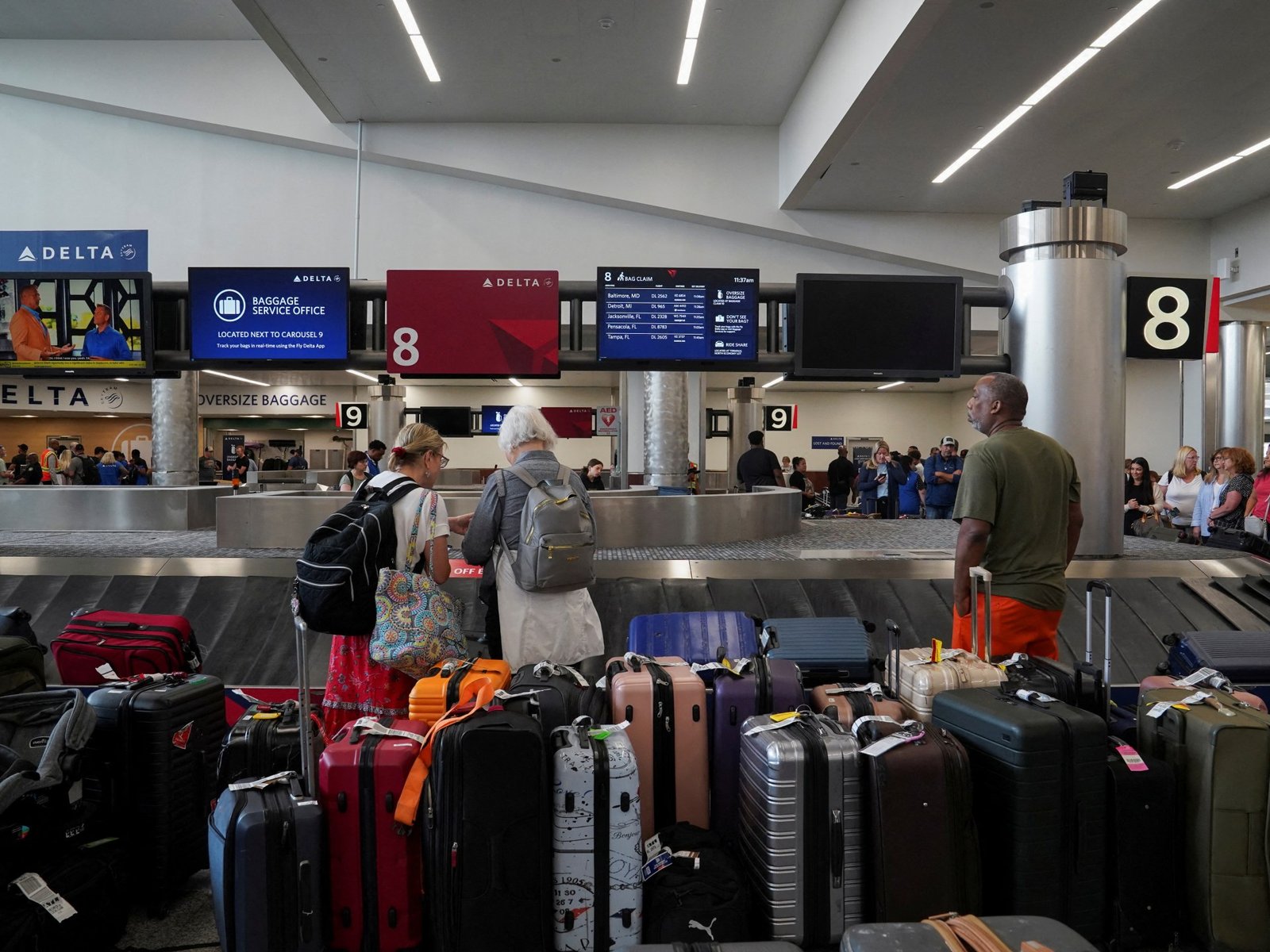
AI-powered baggage optimisation tools and biometric processing – which would allow passengers to walk through immigration without the need to present a physical passport – are also gaining traction as airports seek to improve passenger experience while maintaining operational efficiency.
“AI started changing very rapidly in 2017 and initiated this entire AI race and enabled us to really use AI, the neural network that we talked about and heard about since the 1940s,” Amad Malik, chief AI officer at Airport AI Exchange, said.
“Since then, the progressions have been very, very steep. If you look at the curve from the first day to now, AI is able to do so much more. In only the last two years, the ability has grown exponentially.”
What are airports using AI for?
In addition to quicker immigration controls, analysts said AI is aiding automated check-ins and boardings, baggage handling and tracking, and predictive maintenance. It is also enhancing passenger experience, providing security screening, and offering personalised services and assistance, they said.
AI-powered analytics can enable airports to tailor services and experiences to individual passenger preferences, fostering a more personalised and efficient journey from check-in to boarding, according to Mahmood AlSeddiqi, former vice president of IT for the Bahrain Airport Company.
While insights shared at the Airport AI Exchange suggested AI has advanced at an exponential pace over the past few years, some argue that aviation’s adoption of the technology has remained comparatively limited.
“AI has progressed exponentially over the past few years, but compared to that curve, aviation’s use of AI is still negligible,” said Malik, adding that that gap is partly explained by the sector’s reliance on legacy systems and its inherently cautious operating model.
Much of the technology still underpinning aviation operations dates back decades and innovation is often slowed by the industry’s safety-critical nature, he said.
“When you’re dealing with people’s lives, safety and regulation outweigh speed of innovation,” Malik noted.
