


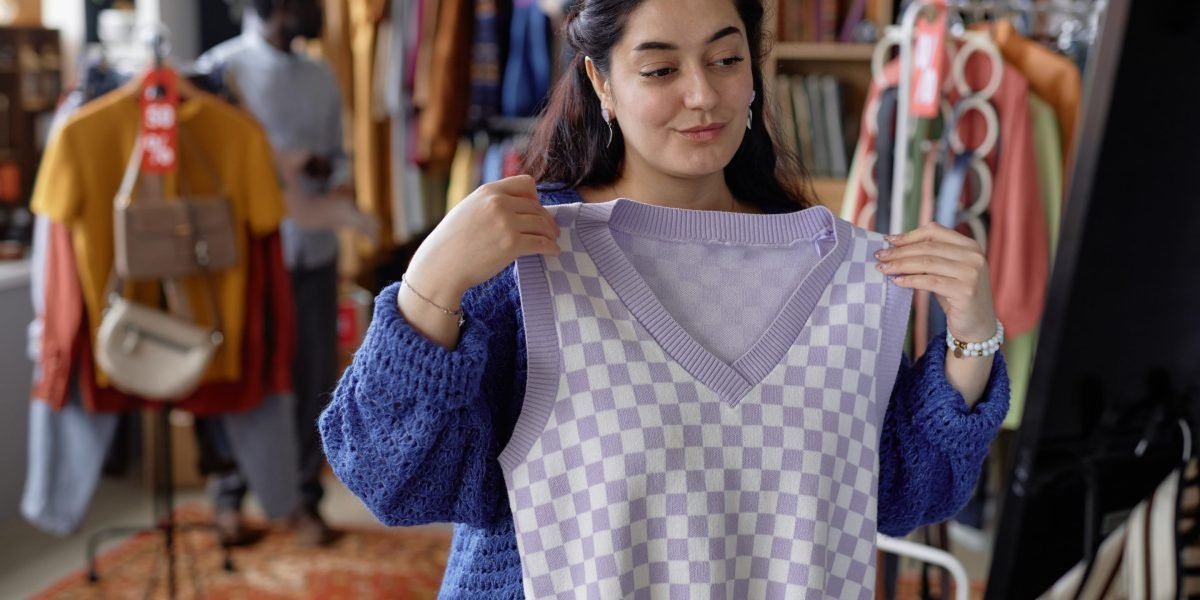
Americans are spending more on secondhand clothes again after years of dealing with price increases, but the way they’re spending is indicative of America’s K-shaped economy.
Clothes spending overall rose 5.1% in March compared to last year, ending nearly three years of declines, according to a report published by the Bank of America Institute this week. Yet the clothes-buying bonanza wasn’t equal across the board.
Secondhand fashion transactions were up 22% year over year in March. Growth was fueled by increases in both “discount apparel,” which was up more than 4% between the fourth quarter of 2025 and the first quarter of this year, as well as secondhand luxury fashion spending, which jumped fivefold during that span, according to the report.
Driving this trend is the increasingly K-shaped economy, said Taylor Bowley, an economist with the Bank of America Institute and a contributor to the report. As top earners’ wages grow and they benefit from stock market highs, they are spending more. Meanwhile, lower-income people are cutting costs to make ends meet. The result is fueling a stratification in the clothing sector as more people are buying clothes.
“We’re seeing that growth isn’t uniform, and it really is concentrated, seemingly, at the high and low ends of the market when it comes to clothes,” Bowley told Fortune. “The amount of money that you’re bringing home is ultimately going to determine what your budget looks like.”
The study did not measure donation or charity-centered thrift models.
The increase in secondhand clothing transactions correlates with a slump in the fortunes of department stores, which often cater to a more middle-income consumer. Kohl’s sales dropped 4% in its fiscal 2025, and the company predicted sales would fall another 2% in the year to come, according to its most recent earnings report. Dillard’s total sales were flat last year compared to the year prior, according to its fourth quarter earnings from February.
At the same time, secondhand clothing platforms like ThredUP revealed in its earnings last month that revenue skyrocketed 20% last year to $310 million.
The company wrote in a separate report earlier this month that the secondhand market grew four times faster than the broader clothing market in 2025. “Resale is no longer just growing, it’s taking direct market share,” said James Reinhart, ThredUp cofounder and CEO, in the report.
In the secondhand luxury market, companies like the Real Real have also benefited by selling used bags, jewelry, and clothing from brands like Chanel, Gucci, Louis Vuitton, and Prada. The company increased its revenue by 15% to $693 million in 2025, according to its earnings report published last month.
Gen Z is not only driving an increase in secondhand clothing demand, they’re also steadily increasing their use of these resale platforms to supplement their income. The number of Bank of America customers selling secondhand clothes increased 16% year over year in March, according to the report, and Gen Z made up 41% of sellers selling their clothes secondhand so far this year.
Driving lower-income and younger consumers’ shift to secondhand clothes are persistent price pressures. , High inflation over the past several years has particularly weighed on American’s wallets. The annual rate of consumer inflation rose to 3.3% in March, up from 2.4% in February and the highest level since April 2024. Apparel prices were also up 3% over the past year.
As a result, consumers are feeling the pain. A report from the University of Michigan from earlier this month showed that consumer sentiment was at its lowest point in the report’s 74-year history.
“When it comes to Gen Z and people looking to stretch their budgets, turning to resale is one way in which consumers seemingly are doing that,” said Bowley.
